

What Is Metrology? Definition, Types & Manufacturing Applications
What Is Metrology? Definition, Types, Applications & Why It Matters
Metrology is the science of measurement. Do not get it confused with Meteorology. Meteorologists and Metrologists are very different.
Metrology
Metrology is the science of measurement. It encompasses all theoretical and practical aspects of measurement, including the establishment of measurement units, the calibration of measuring instruments, and the assurance of measurement accuracy. In our ever-evolving technological landscape, metrology is crucial in various industries, from manufacturing and aerospace to healthcare and environmental science.
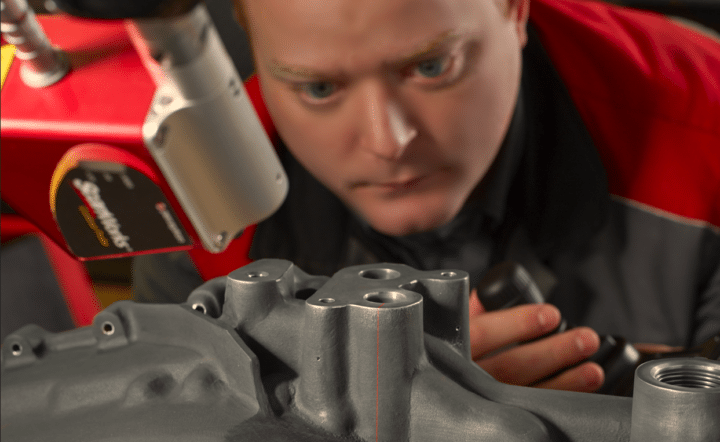
Why is Metrology Important?
At Made to Measure, we understand that precise measurements are the backbone of quality assurance and compliance in manufacturing and production processes. Accurate measurements ensure that products meet specifications, enhance safety, and maintain reliability. Here’s why metrology matters:
- Quality Control: Ensures products meet rigorous quality standards.
- Regulatory Compliance: Helps businesses comply with industry regulations.
- Process Optimization: Identifies variances that could affect performance and efficiency.
- Research and Development: Supports innovation by providing reliable data for product development. Become a Metrologist!
Key aspects of metrology include:
- Units of measurement: Defining and standardizing units like meters, kilograms, seconds, and more.
- Measurement standards: Creating and maintaining physical or virtual references for these units.
- Measurement methods: Developing techniques to accurately and precisely measure quantities.
- Uncertainty analysis: Quantifying the potential errors or variations in measurements.
- Traceability: Ensuring that measurements can be linked back to fundamental standards.
Metrology plays a vital role in various fields, including:
- Manufacturing: Ensuring product quality and consistency.
- Science and research: Conducting accurate experiments and analyzing data.
- Healthcare: Diagnosing diseases and monitoring treatments.
- Trade: Facilitating fair and efficient international commerce.
- Environmental monitoring: Measuring pollution levels and climate change indicators.
In essence, metrology provides the foundation for reliable and comparable measurements, which are essential for countless aspects of modern life.
Our Services
At Made to Measure, we offer a comprehensive range of metrology services tailored to meet the specific needs of our clients. Our state-of-the-art laboratory is equipped with advanced technology and staffed by experienced professionals dedicated to precision and accuracy. Our services include:
- Calibration Services: Ensuring your measuring instruments are accurate and reliable.
- Dimensional Inspection: Measuring physical parts and comparing them to specifications.
- Measurement Equipment & Service: Ensuring products and processes meet defined standards.
- Consultation and Training: Providing expertise to enhance your in-house metrology capabilities.
Our Commitment to Quality
Quality is our top priority. We adhere to the highest industry standards and maintain rigorous procedures to guarantee that all measurements and calibrations are reliable and accurate. Our laboratory is certified and regularly undergoes audits to ensure compliance with the latest metrology standards in ISO 17025.
Get in Touch
Whether you’re looking for precise measurements, calibration services, or expert consultation, Made to Measure is here to help. Contact us today to discuss your metrology needs or to schedule a consultation.
What Does Metrology Mean in Manufacturing?
In manufacturing, metrology is the science and practice of measurement used to prove that parts, tools, processes, and measuring equipment meet defined requirements. It connects engineering drawings and tolerances to objective measurement results. That can include dimensional inspection on a CMM, gage calibration, surface and form measurement, 3D scanning, and the interpretation of GD&T.
For manufacturers, good metrology answers a simple but critical question: Can we trust this measurement enough to make a decision about the part? That is why traceability, measurement uncertainty, calibration, inspection strategy, and trained personnel all matter.
The Three Main Types of Metrology
Scientific Metrology
Scientific metrology develops and maintains measurement units and the highest-level measurement standards.
Industrial Metrology
Industrial metrology applies measurement science to manufacturing. This includes dimensional inspection, CMM measurement, gage calibration, process verification, and other activities used to keep production measurements reliable.
Legal Metrology
Legal metrology covers measurements subject to laws or regulations, particularly measurements used in commerce, safety, health, and public protection.
Metrology in a Modern Quality Department
Metrology is broader than simply owning measuring equipment. A strong measurement system combines the right equipment, calibrated standards, appropriate environmental controls, documented methods, measurement uncertainty, traceability, and people who understand how to interpret engineering requirements.
For dimensional manufacturing work, that often means using coordinate measuring machines and metrology equipment, choosing appropriate CMM software, maintaining equipment through CMM service and calibration, and developing employee skills through metrology training.
Frequently Asked Questions About Metrology
What is the simplest definition of metrology?
Metrology is the science of measurement. In manufacturing, it is the system used to make measurements accurate, repeatable, traceable, and useful for quality decisions.
What does a metrologist do?
A metrologist develops, performs, or supports reliable measurement processes. Depending on the role, that may include CMM programming, dimensional inspection, calibration, uncertainty analysis, GD&T interpretation, measurement system development, and reporting.
What is dimensional metrology?
Dimensional metrology focuses on measurable characteristics such as size, distance, angle, form, orientation, and location. CMMs, vision systems, laser scanners, micrometers, calipers, indicators, and gages are common dimensional metrology tools.
What is the difference between metrology and calibration?
Metrology is the broader science of measurement. Calibration is one part of metrology and compares an instrument or standard against a traceable reference to determine its measurement performance. Learn more about gage calibration services.
Why is metrology important in manufacturing?
Reliable measurement helps manufacturers verify conformance, control processes, reduce scrap and rework, investigate variation, support audits, and make defensible quality decisions.
Need Help With a Measurement Problem?
Made to Measure supports manufacturers with dimensional inspection and CMM services, gage calibration, metrology and GD&T training, and metrology equipment. Whether you need a part inspected, a measurement system improved, equipment supported, or your team trained, contact Made to Measure and tell us what you are trying to measure.